
Looking for a skin clinic near Piliyandala or Maharagama? The most useful first step is not choosing a treatment from an advertisement. It is finding a clinic where a qualified professional can assess your concern, explain suitable options, discuss risks and help you decide whether treatment is appropriate.
This FAQ covers what to check before booking a consultation in the Piliyandala, Maharagama, Colombo, Nugegoda or Dehiwala areas. It is written for people considering concerns such as acne, acne scarring, pigmentation, melasma, signs of ageing, unwanted skin growths or hair thinning. A consultation is still necessary because the same visible concern can have different causes and may need different care.
What should I check when choosing a skin clinic near Piliyandala or Maharagama?
Start with the clinical process rather than promises about being the “best” or producing guaranteed results. Check whether:
- A suitably qualified doctor or medical professional assesses you before treatment.
- The clinic asks about your medical history, medicines, allergies, pregnancy or breastfeeding status, previous procedures and skin reactions.
- The proposed treatment is matched to your concern, skin type, goals and tolerance for downtime.
- Benefits, limitations, alternatives and possible complications are explained clearly.
- You receive an opportunity to ask questions and give informed consent without pressure.
- There is a clear plan for aftercare and for contacting the clinic if a problem develops.
- The clinic can explain when treatment should be postponed or when referral to another medical service is more appropriate.
Photographs, testimonials and social-media content may show how a clinic presents itself, but they do not replace clinical assessment. Be cautious of any provider that diagnoses you from a photograph or promises an identical result.

Does “near me” matter more than the clinic’s clinical standards?
Convenience matters, particularly if a treatment involves more than one visit or requires follow-up. However, distance should be considered alongside practitioner qualifications, hygiene, consultation quality and access to aftercare. A nearby clinic is not automatically suitable, and a clinic farther away may not be practical if you cannot attend review appointments.
For residents of Piliyandala and Maharagama, it can help to check travel time at the hour you expect to attend, parking or public-transport access, appointment availability and whether follow-up can be arranged when needed. Lumera Skin Clinic provides information for people considering doctor-led skin and aesthetic care; review the clinic’s current details before deciding whether to book.
Should I see a doctor before booking an aesthetic treatment?
For many skin and aesthetic concerns, a doctor-led assessment is an important safety step. It may identify a condition that needs medical management rather than a cosmetic procedure. It can also reveal factors that affect suitability, such as active infection, uncontrolled inflammation, medication use, a history of abnormal scarring or recent procedures.
The appropriate professional depends on the concern. Persistent acne, changing pigmentation, unexplained rashes, rapidly growing lesions, painful lumps, bleeding growths or sudden hair loss deserve medical assessment. Do not assume that a facial or aesthetic procedure is the correct first step.
What happens during a skin consultation?
A consultation usually begins with your main concern and what you would like to change or improve. The clinician may ask when it started, what makes it better or worse, what products or treatments you have tried and whether you have experienced irritation or scarring.
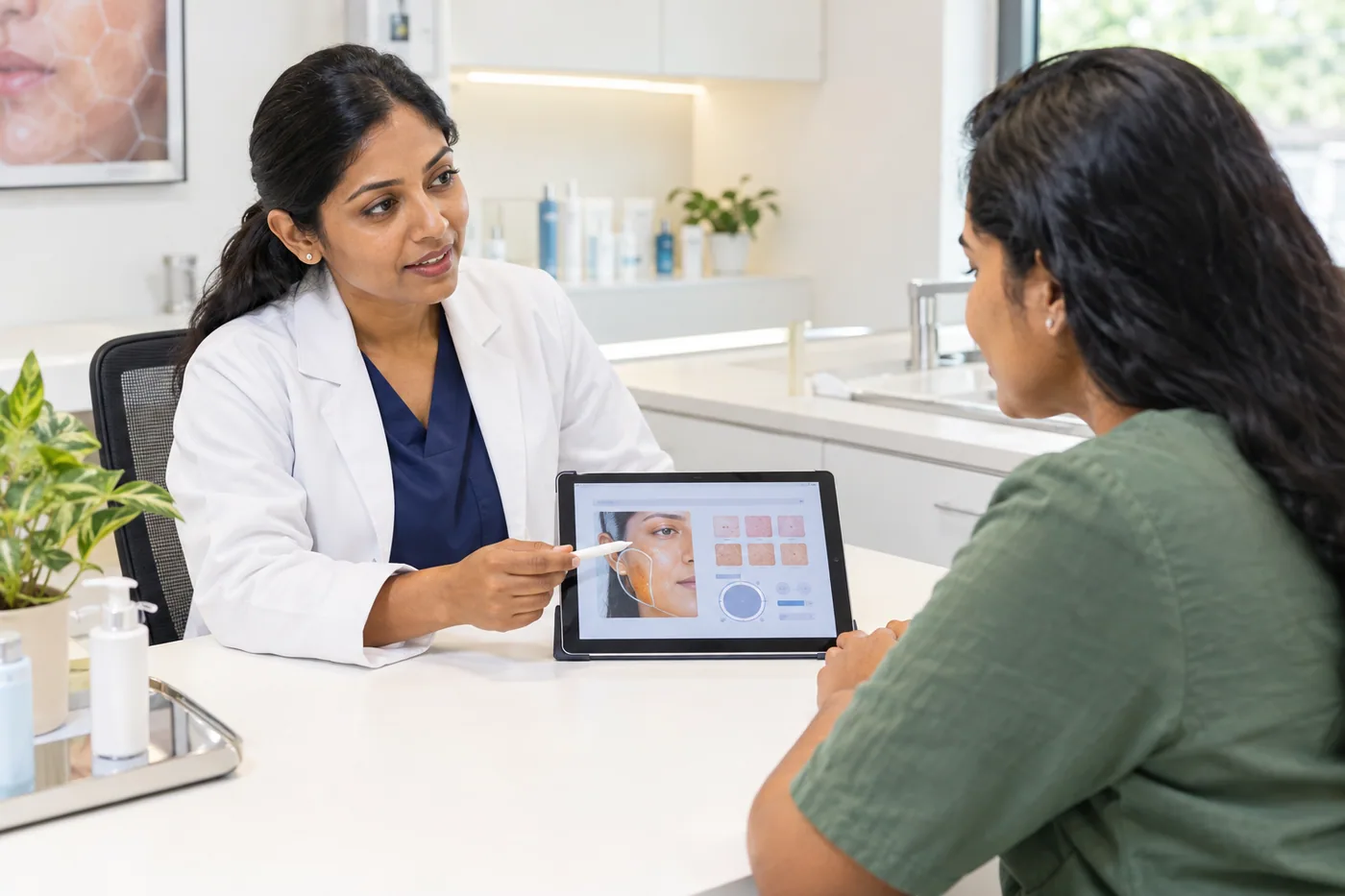
They may examine your skin in person and, where appropriate, use digital skin analysis as an additional assessment tool. A camera or analysis system can help document visible features, but it does not replace a clinical examination or guarantee a diagnosis.
The discussion should then cover suitable options, expected treatment stages, likely downtime, risks, aftercare and alternatives. Sometimes the safest recommendation is to delay a procedure, begin a home-care plan or seek assessment for another condition. You should not feel obliged to proceed on the same day.
How do I know which treatment is suitable for my concern?
The treatment should follow the assessment, not the other way around. For example, acne may require a structured acne-management plan rather than a single facial. Depressed acne scars may be considered for procedures such as microneedling, but active acne, infection or certain healing problems may need attention first. Pigmentation and melasma also require careful assessment because irritation and ultraviolet exposure can influence how the skin responds.
Depending on the assessment, a doctor-led clinic may discuss options such as customised medical facials, HydraFacial, OxyGeneo, microneedling, PRP facial rejuvenation, acne management, acne-scar treatment, pigmentation and melasma care, HIFU lifting, anti-wrinkle injections or dermal fillers. These are not interchangeable, and not every option suits every person.
Ask: “Why is this treatment appropriate for me?”, “What are the alternatives?” and “What would make you advise against it?” A good answer should be specific to your skin and medical history, not just a description of the machine or product.
What safety questions should I ask before treatment?
Useful questions include:
- Who will assess me and perform the treatment?
- What qualifications and relevant experience does the practitioner have?
- What are the common side effects and the less common serious risks?
- What medical conditions, medicines or previous procedures could affect suitability?
- Should I postpone treatment because of active acne, infection, sun exposure or another issue?
- What happens if I have an unexpected reaction?
- What follow-up is included in the care plan?
For injectable treatments, ask specifically about the product used, who administers it, how complications are managed and what emergency arrangements are available. For procedures that affect the skin barrier, ask how to reduce irritation and how the clinic handles concerns during healing.
What should I expect after a skin treatment?
Downtime varies by treatment and by the individual. Some non-invasive treatments may cause temporary redness, tightness or sensitivity. Microneedling can lead to short-term redness and sensitivity, while injectable treatments may cause swelling or bruising. More than one visit may be recommended for some concerns, and results can develop gradually rather than immediately.
Your clinician should explain what is normal, what activities or products to avoid and which symptoms require prompt contact. Do not compare your recovery with a photograph or with someone else’s experience. Skin tone, sensitivity, treatment intensity, sun exposure and aftercare all affect recovery.
How important is aftercare in Sri Lanka’s climate?
Aftercare is especially relevant in a hot, humid and high-UV environment. Follow the clinic’s instructions about cleansing, moisturising, sun protection, exercise, heat exposure, swimming, makeup and active skincare products. Do not add strong exfoliants or unfamiliar products while the skin is recovering unless your clinician advises this.
Sun protection is important for many pigmentation and inflammation-prone concerns. A clinician can advise which sunscreen and routine are appropriate for your skin. Reapply as directed, seek shade where practical and avoid treating temporary irritation by repeatedly adding new products.
What affects the cost of treatment in Sri Lanka?
Clinics may calculate fees differently, so ask for a clear explanation before proceeding. Factors can include:
- The practitioner’s assessment and the complexity of your concern.
- The treatment type, product or equipment used.
- The number of sessions recommended.
- Whether consultation, review, preparation or aftercare products are separate.
- Whether a treatment area is small or extensive.
- Whether medical management is needed before an aesthetic procedure.
A low quoted fee may not represent the full plan, while a higher fee does not by itself prove better care. Ask what is included, whether follow-up is available and whether the recommendation may change after assessment. A responsible clinic should discuss the plan before you commit.
How should I prepare for my first appointment?
Write down your main concern, when it began and what you have already tried. Bring a list of medicines, supplements, allergies, relevant medical conditions and previous procedures. Mention pregnancy or breastfeeding, a history of cold sores, abnormal scarring, significant reactions and recent sun exposure where relevant.
Bring the products you currently use or photograph their ingredient lists. It is also helpful to state your preferred timeline and how much downtime you can realistically manage. These details help the clinician recommend a plan that fits your circumstances rather than an idealised schedule.
When should I postpone an aesthetic treatment?
Ask the clinic before attending if you have an active skin infection, open wound, significant irritation, unexplained rash, sudden change in a mole or lesion, or another acute illness. Some medicines and recent procedures can also affect suitability. Do not conceal relevant information to avoid postponing an appointment; it can increase risk and make assessment less reliable.
What are the main warning signs of a poor clinic experience?
Be cautious if a provider:
- Promises guaranteed results or says there are no risks.
- Pressures you to pay for a package before an assessment.
- Cannot explain who performs the treatment.
- Dismisses questions about complications or aftercare.
- Uses dramatic claims without explaining limitations.
- Suggests the same treatment for everyone.
- Discourages you from seeking a second opinion when you remain uncertain.
A careful consultation should leave you informed, not rushed. If you are unsure, take time to consider the options and ask for written aftercare instructions.
What should I know about Lumera Skin Clinic?
Lumera Skin Clinic is relevant to people comparing doctor-led skin and aesthetic care in the Piliyandala, Maharagama and wider Colombo areas. The important question is not whether one clinic is universally right for everyone, but whether its consultation process fits your concern and expectations. Check the clinic’s current location, available services and appointment details directly.
Do not book a procedure solely because it appears popular online. Arrange a consultation, share your medical history accurately and ask what the clinician would recommend if you chose not to proceed with treatment.
FAQs
Is Lumera Skin Clinic suitable for people from Maharagama?
Lumera Skin Clinic serves patients from Maharagama, Piliyandala and nearby Colombo areas. Confirm the clinic’s current location, appointment availability and travel arrangements before booking.
Can I book a treatment without a consultation?
Whether same-day treatment is appropriate depends on the concern, procedure and clinical assessment. For a new or uncertain skin problem, consultation first is the safer approach.
How many sessions will I need?
There is no universal number. It depends on the diagnosis or concern, treatment selected, skin response, goals and whether the plan includes maintenance. A clinician should explain the likely sequence without guaranteeing an outcome.
Can darker or more easily pigmented skin be treated safely?
Many skin concerns can be managed across a range of skin tones, but the approach must be individualised. The clinician should discuss the risk of irritation or post-inflammatory pigmentation, appropriate settings or treatment intensity and aftercare. Sri Lankan skin can respond differently from the examples shown in online marketing.
What if I only want advice and not a procedure?
You can say this when booking. A consultation can focus on understanding the concern, home care, medical options, referral or whether a procedure is appropriate. You should not be pressured to proceed.
When should I seek urgent medical help instead of an aesthetic appointment?
Seek prompt medical attention for rapidly worsening swelling, severe pain, breathing difficulty, fainting, heavy bleeding, a rapidly changing or bleeding lesion, or symptoms suggesting a serious allergic or infectious reaction. An aesthetic clinic is not a substitute for emergency care.
Next step
If you are comparing a skin clinic near Piliyandala or Maharagama, begin with a proper consultation and ask how the recommendation was reached. Contact Lumera Skin Clinic to discuss your concern, medical history, treatment options, expected recovery and follow-up before deciding whether to proceed.
