
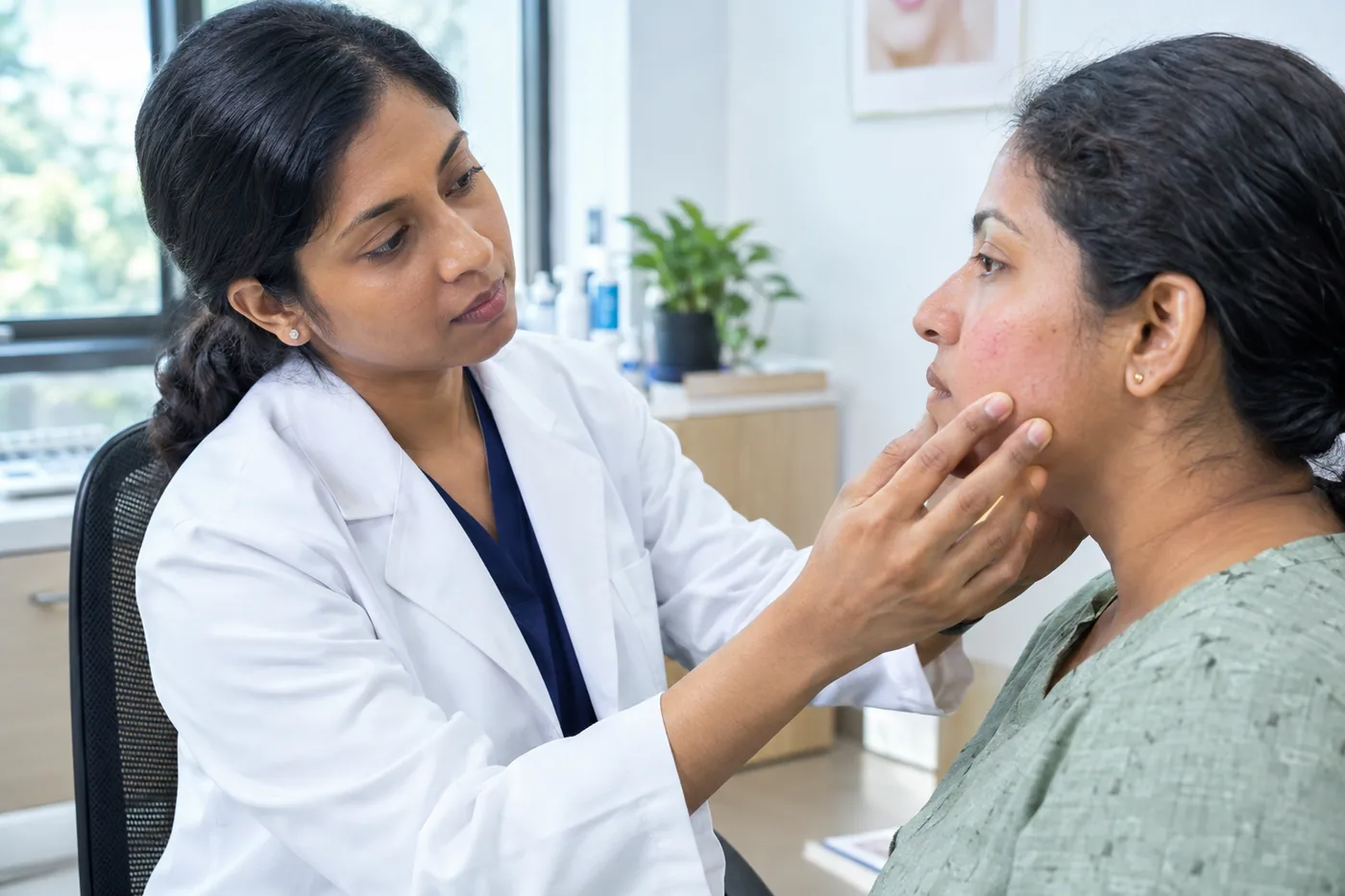
If you are searching for rosacea treatment in Piliyandala, the first step is not choosing a facial or product. Rosacea can resemble acne, contact dermatitis, sun-related irritation or other skin conditions, so a clinician should assess the pattern of redness, flushing, bumps and sensitivity before recommending treatment. Management usually aims to reduce symptoms, limit flare-ups and protect the skin barrier; it is not a guaranteed permanent cure.
What is rosacea?
Rosacea is a chronic inflammatory skin condition that commonly affects the central face, including the cheeks, nose, chin and forehead. It may appear as frequent flushing, persistent redness, visible small blood vessels, acne-like papules or pustules, burning, stinging and increased sensitivity. Some people have mainly redness and flushing, while others develop bumps or eye symptoms.
Rosacea can occur in every skin tone. On brown or deeper Sri Lankan skin, redness may be less obvious than it is on lighter skin, while warmth, dusky colour change, swelling, burning or persistent sensitivity may be more noticeable. A careful history is therefore important.
Who should consider a rosacea consultation near Piliyandala?
A medical assessment may be worthwhile if you have:
- Redness in the centre of the face that returns repeatedly or does not settle
- Flushing after heat, sunlight, spicy food, hot drinks, alcohol, stress or exercise
- Burning, stinging or tightness after applying ordinary skincare
- Small red bumps or pus-filled spots without typical blackheads
- Visible fine blood vessels around the cheeks or nose
- Eye dryness, gritty sensations, recurrent eyelid irritation or redness alongside facial symptoms
- Flare-ups that have not improved with products marketed for acne or sensitive skin
These features do not confirm rosacea. They indicate that self-treatment may not be the most reliable next step.
Why diagnosis matters
Facial redness has many possible causes. Acne often includes comedones such as blackheads or whiteheads. Irritant contact dermatitis may follow a new cleanser, active ingredient or cosmetic. Allergic reactions can cause itching, swelling or a rash. Seborrhoeic dermatitis may affect the eyebrows, sides of the nose and scalp. Sun exposure, heat, medications and other medical conditions can also contribute to flushing.
A clinician may ask when the symptoms began, what triggers them, which products you use, whether your eyes are affected and whether any treatments have already been tried. They may examine the distribution and type of redness, bumps, scaling or visible vessels. There is no single routine test that confirms every case of rosacea; the diagnosis is generally based on the clinical picture and by considering alternatives.
What can rosacea treatment involve?
The appropriate plan depends on the subtype, severity, skin sensitivity, eye symptoms, previous treatment and any relevant health factors. A doctor may discuss one or more of the following broad approaches:
| Concern | Possible management focus |
|---|---|
| Flushing and persistent redness | Trigger reduction, gentle skincare, daily sun protection and clinician-selected treatment where appropriate |
| Acne-like bumps | A medical review to distinguish rosacea from acne and select suitable topical or oral options if indicated |
| Burning and sensitivity | Barrier-supportive skincare and removal of irritating products or unnecessary active ingredients |
| Visible small vessels | Assessment of whether a procedure is appropriate; expectations depend on vessel size, location and skin characteristics |
| Eye symptoms | Prompt clinical assessment, with referral or eye care when needed |
Not every aesthetic treatment is suitable for active rosacea. Strong exfoliation, aggressive scrubbing, heat-based procedures or multiple new products may aggravate symptoms in some people. Treatment should be individualised rather than selected solely because it is advertised for redness.
How a doctor-led consultation may work
- Skin history: You may be asked about flushing triggers, duration, past diagnoses, medications, allergies, eye symptoms and current skincare.
- Examination: The clinician assesses redness, distribution, bumps, scaling, visible vessels and signs that suggest another condition.
- Plan: You may receive advice on barrier care and triggers, a recommendation for medical treatment, or a review plan if the diagnosis is uncertain.
- Safety discussion: The clinician should explain expected benefits, limitations, possible irritation, follow-up and when to seek further care.
At Lumera Skin Clinic, a consultation can help determine whether your facial redness is suitable for clinic-based management or whether another medical assessment is more appropriate. The right treatment cannot be chosen responsibly without examining the skin and understanding your symptoms.
Downtime and discomfort
Downtime depends on the treatment selected. Skincare adjustments and prescribed topical treatment generally do not involve procedure-related downtime, although temporary dryness, peeling, stinging or irritation can occur with some medicines. Any in-clinic procedure may cause short-term redness, warmth, swelling, sensitivity or a need to avoid heat and sun exposure.
Rosacea-prone skin may react more easily than non-sensitive skin. Tell the clinician if you have previously developed prolonged redness, swelling, pigment change or irritation after facials, needling or other procedures. A cautious plan may include delaying elective treatment during an active flare.
When might results appear?
Results are not immediate for most rosacea management plans. Trigger reduction and gentle barrier care may reduce irritation over time, while medical treatments can require consistent use and review. Persistent redness or visible vessels may respond differently from bumps or burning. Some people improve substantially; others need ongoing maintenance because rosacea tends to fluctuate.
Weather is an important practical consideration in Sri Lanka. Heat, humidity, strong sunlight and sweating can make symptoms more difficult to control for some people. A treatment plan should therefore be realistic for your daily routine, travel, outdoor work and local climate.
Skincare and aftercare principles
- Use a gentle, non-abrasive cleanser and lukewarm rather than hot water.
- Choose a plain moisturiser that you tolerate, and introduce only one new product at a time.
- Use broad-spectrum sunscreen regularly and reapply as directed, especially when outdoors. If sunscreen stings, ask a clinician about alternative formulations.
- Avoid scrubs, harsh brushes, strongly fragranced products and unnecessary layering of active ingredients during a flare.
- Track personal triggers rather than assuming every commonly listed trigger affects you.
- After a procedure, follow the clinic’s specific instructions and contact the clinic if swelling, pain, blistering or worsening symptoms concern you.
Do not stop or start prescription treatment without discussing it with the prescribing clinician. “Natural” or herbal products can still irritate sensitive skin or interact with medicines.
What affects the cost of rosacea care in Sri Lanka?
Clinics may structure fees differently, so request a clear explanation during your consultation rather than relying on a general online figure. Cost can be affected by:
- Whether you need an initial doctor consultation or follow-up review
- The complexity of distinguishing rosacea from another cause of redness
- Whether treatment is topical, oral, procedural or a combination
- The number and frequency of follow-up visits
- Any medically appropriate tests, prescriptions or referral to another specialist
- The area being treated and the equipment or consumables required for a procedure
A reputable clinic should explain what is included, what is optional and what follow-up may be needed. Be cautious of packages that promise to permanently eliminate rosacea or guarantee a particular result.
When should you seek medical review promptly?
Arrange medical review if facial redness is persistent, rapidly worsening, painful, associated with marked swelling or not behaving like your usual flare. Seek prompt assessment for eye pain, light sensitivity, blurred vision, significant eye redness or a foreign-body sensation. Those symptoms should not be managed as a purely cosmetic concern.
Frequently asked questions
Can rosacea be cured permanently?
Rosacea is generally managed rather than permanently cured. Symptoms may become much less noticeable with an appropriate plan, but flare-ups can recur and ongoing maintenance may be needed.
Is rosacea the same as acne?
No. Rosacea and acne can both cause bumps, but they have different patterns and may require different treatment. Rosacea often includes flushing, central facial redness or burning, while acne commonly includes blocked pores. Some people can have both.
Can I have a facial if I have rosacea?
It depends on the current state of your skin and the facial. Gentle, non-irritating care may be considered in selected situations, but heat, friction, strong exfoliation and fragranced products may worsen sensitivity. Ask a clinician before booking a procedure during an active flare.
Will sunscreen help rosacea?
Sun exposure is a common aggravating factor for many people with rosacea. Regular sunscreen and physical sun protection may help reduce trigger exposure, but sunscreen alone does not treat every rosacea symptom.
Can rosacea affect darker Sri Lankan skin?
Yes. The condition can occur in all skin tones, but redness may be harder to recognise visually. Burning, warmth, flushing, swelling and changes in facial colour can be important clues. A clinician experienced with different skin tones can assess the complete pattern.
Should I see a doctor or an aesthetic clinic?
Start with a clinician who can assess the diagnosis and explain treatment options safely. If the presentation is uncertain, severe or involves the eyes, a dermatology or medical referral may be appropriate. An aesthetic procedure should follow, not replace, a proper assessment.
Book a careful assessment near Piliyandala
If ongoing flushing, facial redness, burning or acne-like bumps are affecting your confidence or daily comfort, arrange a consultation rather than repeatedly changing products. Lumera Skin Clinic can discuss your concerns, assess whether clinic-based care is suitable and explain realistic next steps. Bring a list of current products and, if possible, photographs showing how your skin looks during a flare.
