
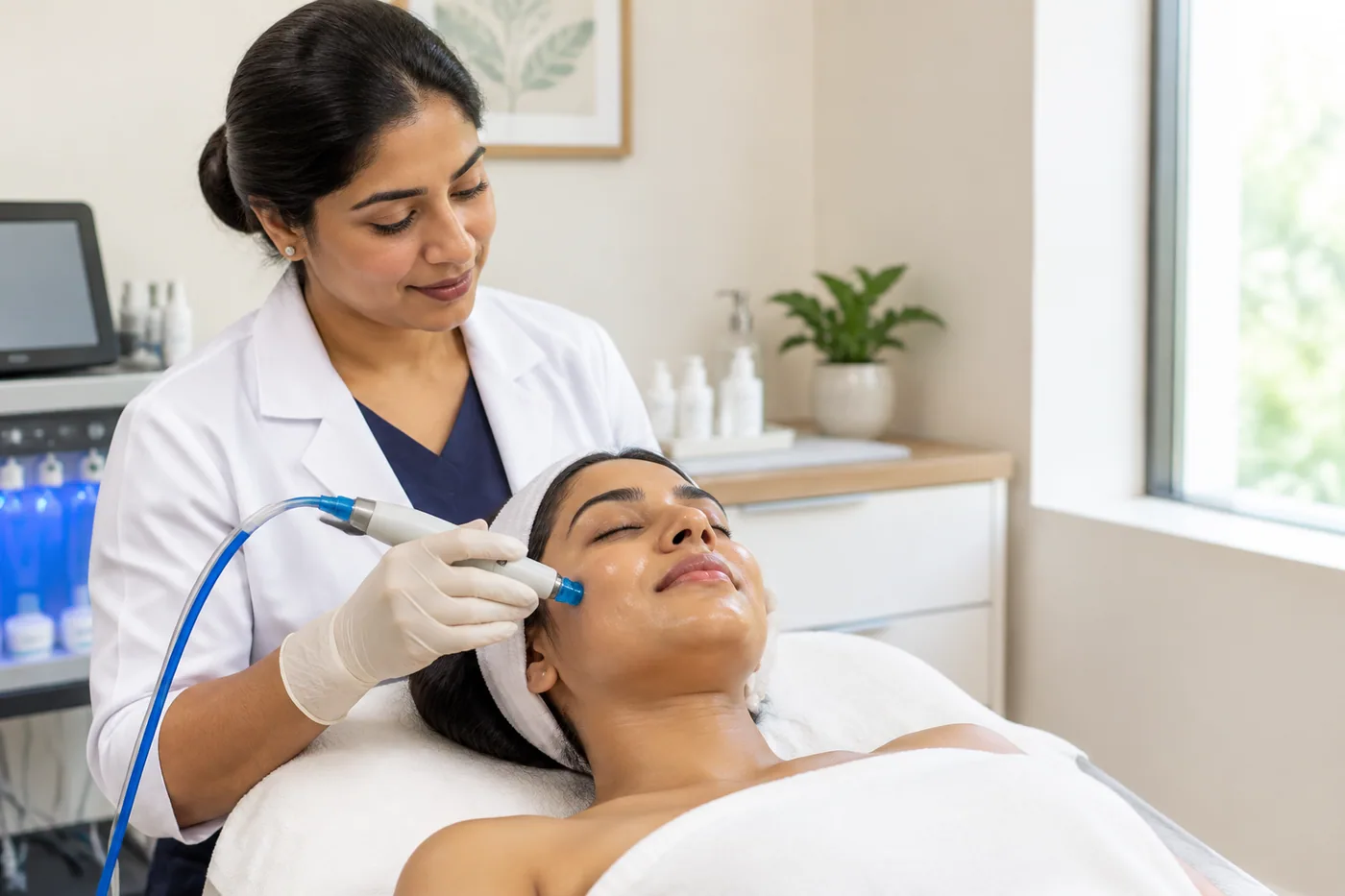
If you are considering a HydraFacial in Colombo, your first visit should answer three practical questions: is it suitable for your skin, what will happen during the appointment, and what can you reasonably expect afterwards? HydraFacial is a non-invasive facial treatment that combines cleansing, exfoliation, extraction and the application of topical hydrating products using a specialised device. It may leave skin looking fresher, but it is not a substitute for medical treatment when you have persistent acne, melasma, dermatitis or another skin condition.
At a doctor-led clinic such as Lumera Skin Clinic in the Piliyandala area, the sensible starting point is an assessment of your concerns, skin sensitivity, current products and medical history. This helps determine whether HydraFacial is appropriate or whether another treatment or medical plan would make more sense.
What is a HydraFacial?
HydraFacial is a device-assisted facial treatment designed to clean and hydrate the skin with minimal interruption to daily activities. The handpiece uses controlled fluid flow and suction to help remove surface debris and loosen impurities, while selected topical solutions are applied during the treatment.
The exact steps and products can vary according to the device, clinic protocol and your skin’s condition. In Sri Lanka’s warm, humid climate, sweat, sunscreen, pollution and frequent cleansing may contribute to a feeling of congestion, but those factors do not automatically mean that stronger treatment is better.
Who may benefit?
HydraFacial may suit adults who want a short, non-invasive treatment for concerns such as dull-looking skin, mild surface congestion, dryness or an event-related refresh. It can be considered for a range of skin tones, including darker Sri Lankan skin, because it does not rely on deliberately injuring or heating the skin in the way some other procedures do.
Suitability still needs to be assessed individually. A consultation is especially important if you have:
- active inflammatory acne, painful cysts or widespread pustules;
- eczema, dermatitis, rosacea or unexplained irritation;
- open wounds, cold sores or an active skin infection;
- marked sensitivity, recent sunburn or peeling;
- a history of unusual reactions to skincare ingredients; or
- recently undergone another facial procedure.
HydraFacial may improve the temporary appearance and feel of the skin, but it should not be presented as a cure for acne, acne scarring, melasma, pigmentation or enlarged pores. Those concerns may require diagnosis and a tailored treatment programme.
What happens at a first HydraFacial appointment?
Your first appointment generally involves more than the treatment itself. A useful visit has four stages.
1. Skin assessment and treatment planning
The provider should ask about your goals, allergies, current skincare, recent procedures and relevant medical conditions. They may examine areas of dryness, congestion, redness or active lesions. Tell them if you use prescription retinoids, acne medication or products that make your skin more sensitive.
This is also the time to discuss what HydraFacial cannot realistically address. If your main concern is persistent acne or uneven pigmentation, a facial alone may not be the most appropriate first step.
2. Preparation
Make-up and surface products are removed before the skin is cleansed. Depending on your skin and the clinic’s protocol, the practitioner may adjust the solutions, suction or treatment areas. You should be able to ask what products will be applied and whether any optional add-ons are being recommended.
3. The treatment steps
A typical session may include:
- Cleansing: surface oil, sunscreen and debris are removed.
- Exfoliation: the device helps lift surface dead skin cells using controlled fluid flow.
- Extraction: suction may help remove loosened debris from pores. It should not feel like forceful squeezing.
- Hydration: a selected topical solution is applied to support a hydrated, comfortable skin feel.
- Finishing care: the skin may be finished with appropriate moisturiser and daytime sun protection.
You may feel cool fluid, mild pressure or suction. Sharp pain, intense burning or persistent discomfort should be reported immediately so the settings or products can be reviewed.
4. Post-treatment discussion
Before leaving, you should receive simple instructions on cleansing, moisturising, sun protection and when to restart active products. Ask which signs are expected and which would justify contacting the clinic.
How much downtime should you expect?
HydraFacial is commonly chosen because it usually involves little visible recovery compared with more invasive procedures. Some people have temporary redness, tightness, mild sensitivity or small areas of irritation. These effects may be more noticeable if the skin is already dry, sun-exposed or reactive.
Do not schedule treatment immediately before an important event without first knowing how your skin responds. Sri Lankan heat, humidity, direct sun and sweating can make freshly treated skin feel uncomfortable, so plan to limit unnecessary sun exposure and strenuous outdoor activity soon afterwards.
When might results appear?
Some people notice a smoother texture or a more hydrated appearance soon after treatment. These are generally short-term cosmetic effects and can vary according to your baseline skin condition, products used, hydration, sun exposure and home care.
HydraFacial should not be described as permanently clearing pores or reversing skin ageing. If you are seeking improvement in acne, melasma, post-inflammatory pigmentation or scarring, progress usually depends on a broader, individually planned approach. A clinician can explain whether HydraFacial has a useful supporting role.
What affects the cost in Colombo?
Clinics may charge different amounts because the treatment is not always identical from one appointment to another. Factors that can affect the cost include:
- the clinic’s clinical oversight and practitioner experience;
- the device and treatment protocol used;
- the number and type of topical solutions included;
- the treatment area and appointment length;
- whether a consultation or skin assessment is included; and
- any optional, clinically appropriate add-ons.
A responsible clinic should explain what is included before treatment rather than presenting an unclear package. Inquiries from Colombo, Dehiwala, Nugegoda, Maharagama and Piliyandala should also consider travel, follow-up access and whether the provider can manage a skin problem if the facial is not enough.
Aftercare in Sri Lanka’s climate
- Use a gentle cleanser and avoid scrubbing the treated skin.
- Apply a bland moisturiser if the skin feels dry or tight.
- Use broad-spectrum sunscreen and reduce direct midday sun exposure.
- Avoid introducing exfoliating acids, retinoids or other strong actives until the clinic advises that your skin is ready.
- Be cautious with heavy make-up, hot environments and vigorous exercise if the skin feels irritated.
- Do not pick at areas that feel rough or congested.
Follow the clinic’s specific instructions if they differ, because aftercare should reflect the products and intensity used. Contact the provider if you develop marked swelling, blistering, severe pain, spreading redness or symptoms that concern you.
Questions to ask before booking
- Who will assess my skin before treatment?
- Which products and device settings are planned for my skin?
- Should I pause any current skincare or prescription treatment?
- What result is realistic for my main concern?
- What aftercare is included, and whom should I contact if I react?
FAQs
Is HydraFacial suitable for darker Sri Lankan skin?
It may be suitable, but skin tone alone does not determine safety. Sensitivity, active inflammation, recent sun exposure, current medication and the selected protocol also matter. A proper assessment is preferable to assuming that any facial is suitable.
Is HydraFacial painful?
Most people describe cleansing and suction as tolerable pressure or a cooling sensation. Experience varies. Burning, sharp pain or significant discomfort should be reported during the appointment.
Can I have HydraFacial for acne?
It may help remove surface debris temporarily, but it is not a complete treatment for active or persistent acne. Medical acne management may be needed, particularly if there are painful lesions or a risk of scarring.
Can HydraFacial remove melasma or acne scars?
It should not be promised as a cure for either condition. Melasma and acne scars have different causes and may require a diagnosis-led plan. A facial can sometimes be considered as supportive care, depending on the individual.
How often should I have one?
There is no universal schedule that suits everyone. Frequency should depend on your skin’s response, goals and the rest of your skincare or treatment plan. More frequent treatment is not automatically better.
Can I wear make-up after treatment?
Ask the treating clinic because advice may depend on your skin’s reaction and the products used. If the skin is red, tender or unusually sensitive, keeping the routine simple is generally more comfortable.
Planning your first visit
A HydraFacial can be a reasonable option for someone seeking a brief, non-invasive skin refresh, provided expectations are realistic and the treatment is adapted to the skin. The important first step is not choosing the strongest package; it is having your concerns assessed and understanding what the procedure can and cannot do.
If you are comparing options for a HydraFacial in Colombo or the surrounding areas, contact Lumera Skin Clinic to arrange a consultation and discuss whether this treatment fits your skin and goals. A clinician can explain the protocol, likely downtime and alternatives without replacing an in-person assessment with an online promise.
