
If you are considering a HydraFacial in Colombo, your first visit should include more than the procedure itself. A qualified professional should assess your skin, discuss your concerns and explain whether this treatment is appropriate for you. HydraFacial generally combines cleansing, exfoliation, extraction and hydration in one appointment, although the exact products and sequence may vary.
This guide explains what a first visit may involve, who may be suitable, what downtime and side effects to consider, when results may become noticeable, how to care for your skin afterwards and which factors influence treatment cost in Sri Lanka. It is general information, not a diagnosis or a substitute for a consultation with a doctor.
What is a HydraFacial?
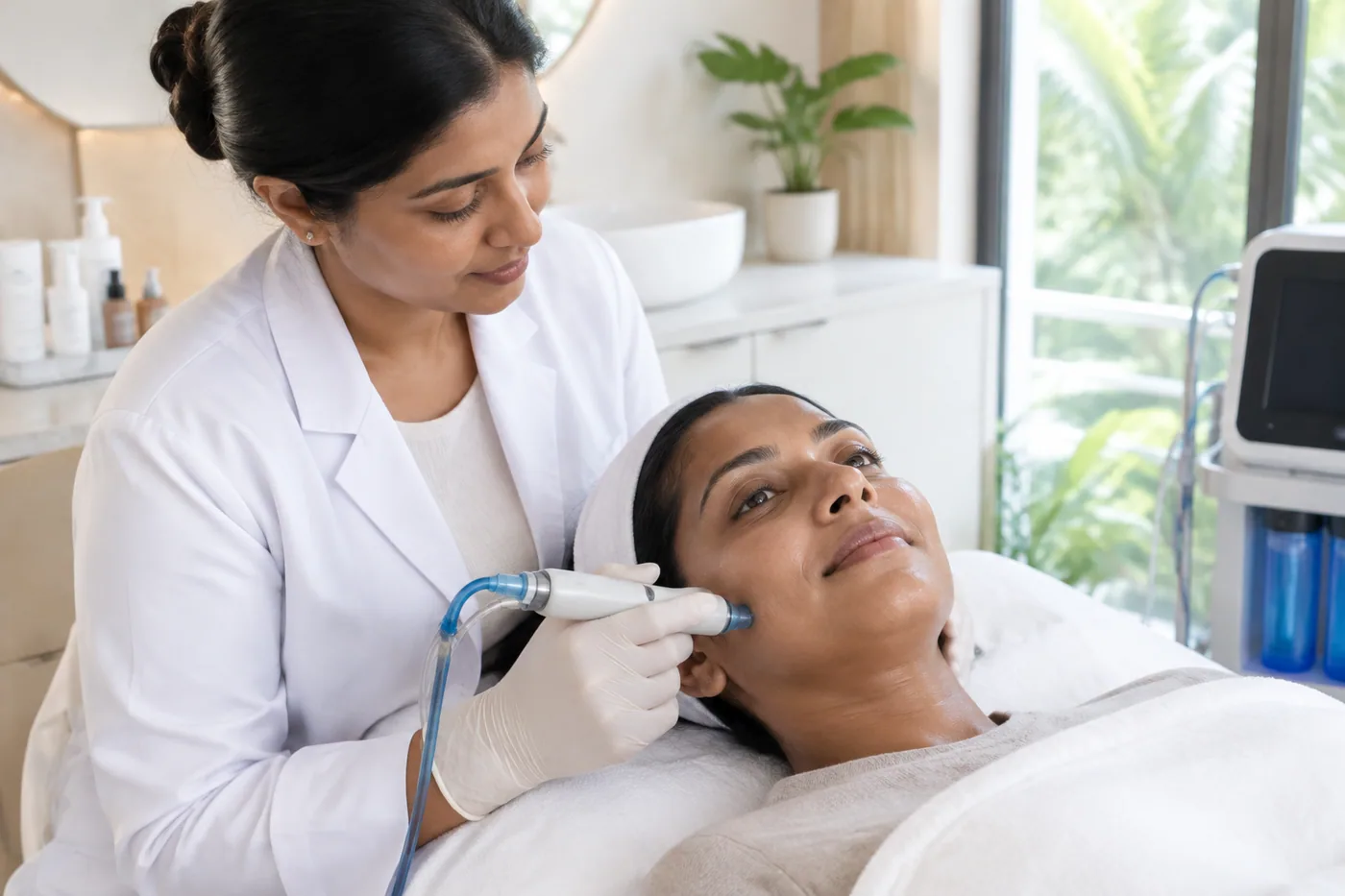
HydraFacial is a non-surgical facial treatment that uses a specialised device and topical solutions to cleanse the skin, loosen surface build-up, perform gentle exfoliation, remove some pore debris and apply hydrating or supportive ingredients. People often choose it when they want a refreshed appearance without the recovery associated with more intensive procedures.
Expectations should remain realistic. A HydraFacial may temporarily improve the appearance and feel of dull, dehydrated or congested skin, but it is not a cure for acne, melasma, deep acne scarring, significant sagging or other medical skin conditions. Persistent, painful or changing skin problems need proper assessment and may require a different treatment plan.
Who may be suitable?
A clinician may consider HydraFacial for adults concerned about surface dullness, mild congestion, uneven-feeling texture or dehydration. Some people also choose it before an event because visible recovery is often limited, although individual responses vary.
Suitability depends on the condition of your skin on the day. Tell the practitioner if you have:
- active acne, inflamed or infected areas, cold sores or open wounds;
- eczema, dermatitis, rosacea or unusually sensitive skin;
- a recent sunburn or significant tanning;
- known allergies or reactions to skincare ingredients;
- recent procedures, prescription treatments or medicines that affect the skin;
- pregnancy, breastfeeding or another health concern requiring extra caution.
A consultation does not automatically mean treatment should go ahead. Postponing the appointment or choosing another approach may sometimes be safer.
What happens during a first HydraFacial visit?
1. Consultation and skin assessment
The visit should begin with a discussion about your goals, medical history, current skincare routine and previous reactions. In Colombo’s warm, humid climate, sweat, sunscreen, pollution and frequent sun exposure can affect how skin feels and behaves. Describe whether your skin becomes oily, dry, irritated or congested during the day rather than relying only on labels such as “oily” or “dry.”
The practitioner should examine your skin and explain realistic outcomes. If you are visiting Lumera Skin Clinic, use the consultation to ask which parts of the treatment are included and whether the plan needs adjustment for sensitivity, pigmentation concerns or active breakouts.
2. Preparation
Your face is cleansed so makeup, sunscreen and surface impurities are removed. Irritated areas may be protected or left untreated. Tell the practitioner if any step feels uncomfortable; a stronger sensation is not automatically a better treatment.
3. Cleansing and gentle exfoliation
A treatment tip is passed over the skin to help remove surface debris and loosen dead skin cells. Many people describe the sensation as light movement or suction rather than the prickling associated with needles. The strength and products used should be appropriate for your skin condition.
4. Extraction
Controlled suction may help clear some superficial pore contents. This is not the same as manually squeezing every blackhead, and it cannot remove all congestion in one visit. Aggressive suction can irritate skin, so inflamed lesions and fragile areas should be avoided.
5. Hydration and finishing products
Hydrating or soothing solutions may then be applied. Discuss the specific formulation if you have allergies, sensitive skin or a history of reactions. The practitioner may finish with moisturiser and broad-spectrum sun protection.
6. Aftercare discussion
Before leaving, you should be told what to avoid, which mild reactions may be expected and when to contact the clinic. Ask whether one session is appropriate for your goal or whether another treatment would be more suitable.
How long does it take?
Appointment length varies with the assessment, chosen steps and whether this is your first visit. Allow additional time for consultation rather than booking so tightly that you need to rush back to work. The clinic should be able to explain the expected appointment duration when you book.
Is there downtime?
Many people return to normal activities after a HydraFacial, but “no downtime” does not mean “no possible reaction.” Temporary redness, tightness, mild sensitivity or dryness can occur. These effects may be more noticeable if the skin is already irritated, suction is too strong or unsuitable products are used.
Arrange medical review if you develop marked swelling, severe pain, blistering, spreading redness, pus or symptoms that worsen rather than settle. The practitioner should give you clear instructions for concerns after treatment.
When might you see results?
Some people notice a smoother feel or fresher appearance soon after treatment. Hydration and surface improvements may be temporary. Results differ according to baseline skin condition, sun exposure, skincare, product selection and the concern being treated.
If your main concern is persistent acne, melasma, pronounced pigmentation or acne scarring, HydraFacial alone may not address the underlying problem. Ask for a plan based on assessment rather than repeating sessions simply because the treatment feels comfortable.
Aftercare in Colombo’s climate
- Use a gentle cleanser and avoid scrubbing treated skin.
- Apply a bland moisturiser if the skin feels dry or tight.
- Use broad-spectrum sunscreen and limit direct sun exposure. Reapply as directed when outdoors.
- Avoid introducing several new skincare products immediately after treatment.
- Follow the clinic’s instructions about retinoids, exfoliating acids, waxing and other potentially irritating products.
- Do not pick or squeeze areas that appear temporarily congested.
Swimming, heavy sweating or outdoor activity may need to be limited for a period specified by your practitioner, depending on your skin’s response.
What affects HydraFacial cost in Sri Lanka?
Fees may differ because appointments are not always identical. Cost can be affected by:
- whether a skin consultation is included;
- the treatment duration and number of stages;
- the products or targeted add-ons selected;
- the practitioner’s qualifications and level of supervision;
- clinic location, equipment and hygiene standards;
- whether you are booking one appointment or a recommended course.
Ask for a written explanation of what is included before booking. Do not choose solely on the lowest advertised fee if the offer does not explain who assesses your skin, which products are used or what aftercare is provided.
Questions to ask at your first visit
| Question | Why it matters |
|---|---|
| Is my skin suitable today? | Active irritation, infection or sunburn may mean postponing treatment. |
| Which steps and products will be used? | This helps identify possible allergens and set expectations. |
| What result is realistic for my concern? | Surface hydration is different from treating acne, scars or pigmentation. |
| What reactions should I expect? | You should know what is normal and when to seek help. |
| What is included in the fee? | Consultation, treatment steps and aftercare may vary. |
FAQs
Can I have HydraFacial if I have acne?
It depends on the type and activity of the acne. Inflamed, painful or infected lesions may need medical assessment first. HydraFacial should not be presented as a universal acne treatment.
Is HydraFacial suitable for darker Sri Lankan skin tones?
Skin tone alone does not determine suitability. Assessment is still needed, particularly if you are prone to post-inflammatory pigmentation or irritation. Gentle settings, appropriate products and sun protection matter.
Can I wear makeup after treatment?
Follow the specific advice from your practitioner. Some people may be able to apply makeup shortly afterwards, while sensitive or reactive skin may benefit from a short break.
How often should I have it?
There is no single schedule that suits everyone. Frequency should depend on your skin’s response, the original concern and whether a clinician believes repeat treatment is useful.
Does HydraFacial permanently clear pores?
No. Pores do not permanently disappear, and congestion can return because oil production, skincare, hormones and environmental factors continue to affect the skin.
Where can I discuss HydraFacial near Colombo?
Choose a clinic that offers an appropriate consultation, explains risks and does not promise guaranteed results. You can contact Lumera Skin Clinic to discuss whether HydraFacial is suitable for your skin and goals before arranging treatment.
Bottom line
A first HydraFacial visit in Colombo should include assessment, a clear explanation of the treatment steps and practical aftercare—not just a quick procedure. It may suit people seeking temporary surface refreshment, hydration or mild decongestion, but it is not the right answer for every skin concern. Book a consultation with a doctor-led clinic to discuss your skin, expectations and safer treatment options.
