
If you are searching for the best acne scar treatment in Colombo, the right option depends less on a single popular procedure and more on the type of scarring you have. A doctor should first assess whether your scars are depressed, raised, discoloured, or still changing because of active acne. Skin tone, sun exposure, medical history, and how much downtime you can manage also affect the plan.
In Colombo and surrounding areas, commonly discussed professional options include microneedling and platelet-rich plasma (PRP) facial rejuvenation. These treatments are not interchangeable, and neither is suitable for every scar or every patient. This guide explains what a careful consultation should cover, how sessions may work, realistic recovery and result timelines, and what can affect treatment cost in Sri Lanka.
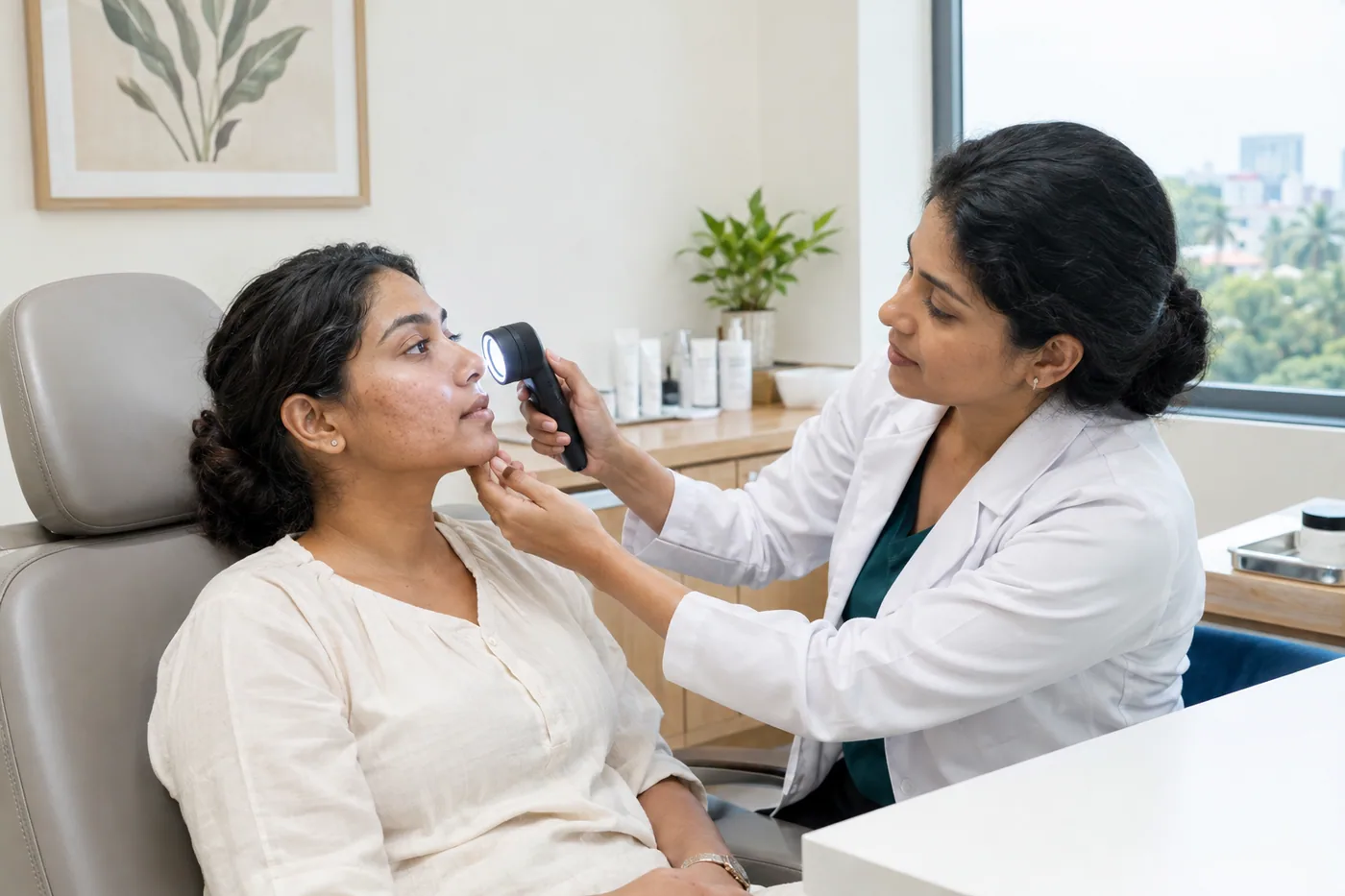
First identify the type of acne scarring
“Acne scars” can describe several different concerns. A clinic may classify them as:
| Concern | What it may look like | Why assessment matters |
|---|---|---|
| Atrophic scars | Indented areas or depressions in the skin | Different depths and shapes may respond differently to collagen-stimulating treatments. |
| Raised scars | Firm or elevated areas above the surrounding skin | They may need a different medical approach from depressed scars. |
| Post-acne marks | Brown, grey-brown, pink, or red areas after spots heal | Marks are not the same as textural scars and may require a pigmentation-focused assessment. |
| Active acne with early scarring | New breakouts alongside texture changes | Controlling new inflammation is important before focusing only on old scars. |
At-home products may help some mild marks or support general skin health, but established textural scars usually require an in-person evaluation. A photograph cannot reliably show scar depth, skin sensitivity, or whether a raised lesion is actually an acne scar.
Microneedling: a common option for depressed acne scars
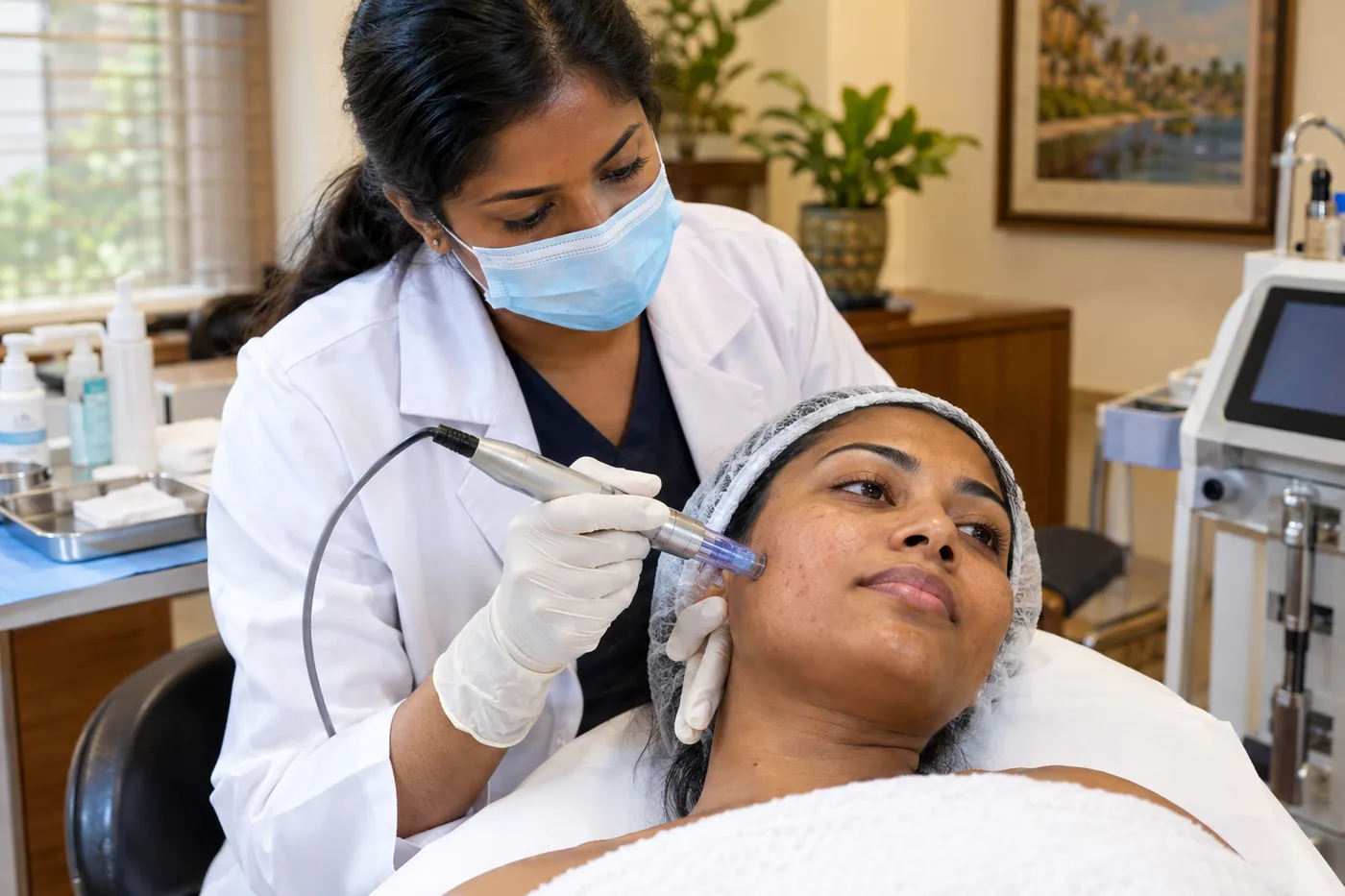
Microneedling uses a device with fine sterile needles to create controlled micro-injuries in the skin. The intended response is a wound-healing process that may encourage collagen and improve the appearance of some uneven texture over a series of treatments. At Lumera Skin Clinic, microneedling may be performed with a Dr. Pen device after assessing whether it is appropriate for your skin and scars. You can review the clinic’s doctor-led skin treatment information before arranging a consultation.
Microneedling is generally discussed more often for certain atrophic scars than for raised scars. It may not be the best first choice when acne is actively inflamed, the skin barrier is irritated, or there is a history of abnormal scarring. A clinician should also consider whether the scars are too deep or tethered for microneedling alone to be useful.
What a microneedling session may involve
- Assessment: The clinician examines scar type, active acne, pigmentation tendency, sensitivity, and relevant medical history.
- Preparation: The skin is cleansed. A topical numbing product may be considered, depending on the treatment plan and clinic protocol.
- Device treatment: The device is moved across selected areas using settings chosen for the individual rather than applying the same depth everywhere.
- Post-treatment care: The clinician explains what to apply, what to avoid, and when to resume usual products.
During treatment, patients may feel vibration, prickling, warmth, or brief discomfort. Pinpoint bleeding can occur, but the visible response varies by treatment settings and skin sensitivity.
PRP facial rejuvenation: where it may fit
PRP facial rejuvenation uses a small blood sample that is processed to concentrate platelets before the prepared product is applied or used as part of a clinician-designed facial treatment. PRP is sometimes considered alongside procedures intended to stimulate skin repair, but the suitability and technique vary between patients.
PRP should not be presented as a universal acne-scar solution. It may be discussed for selected patients who want a doctor-led regenerative approach, but the decision depends on scar pattern, general health, medications, blood-related conditions, and expectations. It is also important to distinguish PRP for facial rejuvenation from PRP hair restoration; they are separate treatment goals.
A consultation at Lumera Skin Clinic in the Colombo area can help determine whether microneedling, PRP, or another available acne-management approach is more appropriate. The clinic should explain what the proposed treatment can realistically target and what it cannot.
Which option may suit which situation?
There is no responsible “best” treatment for every person. A clinician may consider the following:
- Depressed texture: Microneedling may be considered for selected atrophic scars, particularly when the clinician believes controlled collagen stimulation could help.
- Raised scars: These require careful assessment and may not be suitable for a standard microneedling plan.
- Brown marks after acne: The priority may be acne control and pigmentation care rather than treating a scar that is not actually indented.
- Ongoing breakouts: Acne management may need to come first or happen alongside scar planning.
- Mixed scars: A combination approach may be discussed, but it should be staged carefully rather than performed simply because several treatments are available.
- Very sensitive or easily pigmented skin: Conservative settings, sun protection, and gradual treatment planning are especially important for reducing avoidable irritation and post-inflammatory pigmentation.
Downtime and results timeline
After microneedling, temporary redness, warmth, tightness, sensitivity, or mild swelling may occur. Some people have visible flaking or small areas of crusting. Recovery varies with treatment intensity, skin reactivity, and how closely aftercare is followed. PRP-related effects may include short-lived redness, swelling, tenderness, or bruising, depending on the technique used.
Do not judge the final result immediately after a session. Early changes may reflect swelling or irritation, while collagen remodelling takes time. Acne scars usually require a course of treatment rather than one appointment, and the number and spacing of sessions must be decided after assessment. Improvement may be gradual and partial; deep or tethered scars may remain visible.
Sun exposure can make post-treatment discolouration more likely, particularly in deeper skin tones. Colombo’s bright conditions and warm, humid climate make consistent sun protection and sensible scheduling important. A clinic should give you specific instructions based on your skin and treatment settings.
What affects the cost in Sri Lanka?
Clinics may price acne-scar treatment differently because the treatment plan is not identical for everyone. Factors that can affect the quoted cost include:
- Whether the appointment includes a detailed medical consultation and assessment
- The treatment selected and whether more than one modality is clinically appropriate
- The number of areas being treated and the extent of scarring
- Whether numbing, sterile consumables, PRP processing, or other session-specific elements are included
- The number and spacing of sessions recommended
- Clinician expertise, clinic protocols, and follow-up arrangements
Ask for a written explanation of what is included rather than choosing solely on an advertised session fee. A lower initial cost may not represent the same treatment scope, safety process, or follow-up.
Aftercare in Colombo’s climate
Your clinic’s instructions should take priority, but general aftercare discussions may include:
- Use only the products recommended for the immediate recovery period.
- Avoid scrubs, picking, strong active ingredients, and unnecessary friction until the skin has recovered.
- Protect treated skin from sunlight with suitable clothing and a broad-spectrum sunscreen when advised.
- Do not restart retinoids, exfoliating acids, or other potentially irritating products until the clinician confirms that it is appropriate.
- Avoid swimming, intense heat, or heavy exercise for the period advised by the clinic if these could increase irritation or contamination risk.
- Contact the clinic if you develop worsening pain, spreading redness, significant swelling, pus, fever, or another unexpected reaction.
Questions to ask before booking
A useful consultation should leave you with clear answers to these questions:
- What type of scars or post-acne marks do I have?
- Is my acne sufficiently controlled for scar treatment?
- Why is this treatment being recommended for my skin?
- What level of improvement is realistic, and what may remain?
- How many sessions might be considered, and how will progress be reviewed?
- What downtime and pigment-related risks apply to my skin tone?
- Which products and activities should I avoid before and after treatment?
- What is included in the quoted cost?
Frequently asked questions
What is the best acne scar treatment in Colombo?
There is no single best treatment for every person. The appropriate option depends on scar type, active acne, skin tone, medical history, and the improvement you hope to achieve. Microneedling and PRP may be discussed for selected patients, but a consultation is needed before choosing.
Can acne scars be removed completely?
Professional treatment aims to reduce the appearance of scars, not promise complete removal. Results depend on scar depth, skin response, treatment consistency, and whether new acne continues to form.
Is microneedling suitable for all skin tones?
It may be suitable for some people with deeper skin tones, but treatment settings and aftercare must be selected carefully. Irritation can contribute to post-inflammatory pigmentation, so an experienced assessment is important.
How many sessions will I need?
The number cannot be determined responsibly without examining your skin. A clinician may recommend a course, with review between sessions, but the plan can change according to healing and response.
Can I have acne-scar treatment while I still have active acne?
It depends on the severity and type of acne. Ongoing inflammation may need to be managed first or at the same time. Treating scars while new lesions continue to develop may limit the overall benefit.
When should I arrange a review?
Follow the clinic’s planned review schedule. Contact the clinic sooner if your recovery is worsening rather than gradually settling, or if you notice signs of infection or an unusual reaction.
Choosing a Colombo clinic carefully
The best starting point is not a bold guarantee or a heavily edited social-media photograph. Look for a clinic that explains scar classification, discusses risks for Sri Lankan skin tones, checks for active acne and relevant medical history, and gives written aftercare. Lumera Skin Clinic serves patients in and around Piliyandala, Colombo, Maharagama, Dehiwala, and Nugegoda. Book a consultation so a qualified clinician can assess your scars and explain which available approach, if any, fits your skin and goals.
