
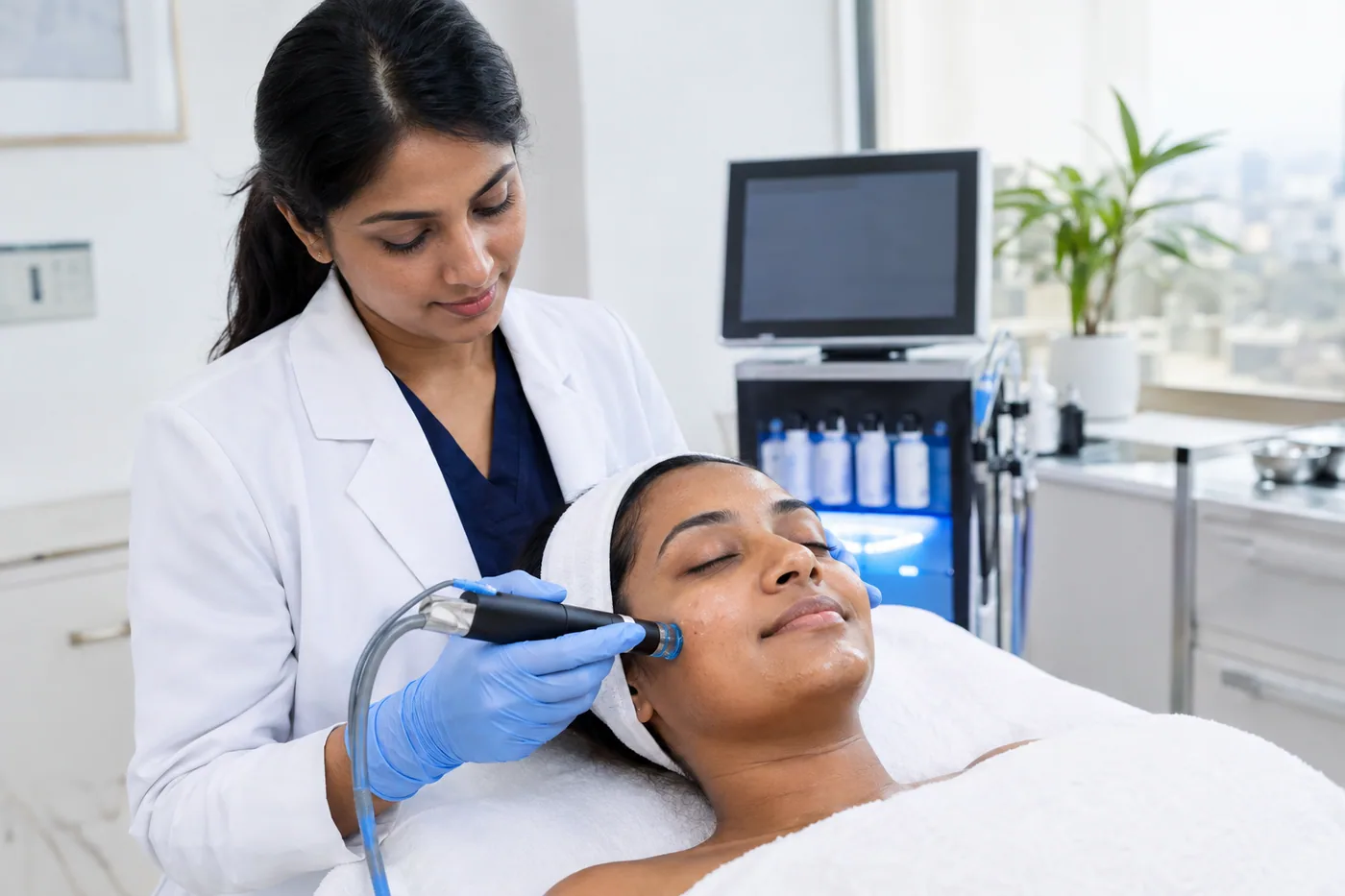
A first HydraFacial visit in Colombo usually begins with a conversation about your skin, your goals and any sensitivities or current treatments before the clinician decides whether the treatment is appropriate. The session commonly involves cleansing and exfoliation, gentle extraction and hydration steps using a device. It is not a cure for acne, pigmentation or other skin conditions, and the experience and visible response vary from person to person.
This guide explains what to ask and expect at a first appointment, including suitability, the treatment sequence, possible short-lived reactions, aftercare and factors that can affect the quoted cost. If you have active irritation, a skin condition, a recent procedure or uncertainty about suitability, discuss it with a qualified clinician first.
What is HydraFacial?
HydraFacial is a device-assisted facial treatment that combines cleansing, exfoliation, suction-assisted removal of surface debris and application of hydrating products. The exact protocol and products vary by provider. A clinic should explain the steps it plans to use and adapt or defer treatment if the skin assessment suggests a concern.
It is best understood as a cosmetic skin-care procedure, not a replacement for medical assessment or a treatment that guarantees lasting changes. It may leave skin feeling temporarily smoother or refreshed, but individual responses differ, and persistent acne, melasma, unexplained rashes or other concerns need proper clinical evaluation.
Who might consider a first session?
An adult interested in a non-invasive facial and a refreshed feel may ask about HydraFacial, provided a clinician considers it suitable after reviewing skin condition and history. A consultation should cover your main concern, prior reactions to facial products, allergies, current skincare and any prescription or over-the-counter treatments.
Tell the clinician about active inflammation, cuts, infection, recent sunburn, a history of sensitivity, or recent aesthetic procedures. These factors may mean modifying, postponing or avoiding the session. Do not assume that a treatment is appropriate simply because it is described as gentle. The clinician should explain the relevant risks and alternatives for your situation.
What happens at the appointment?
- Skin discussion and assessment: The clinician asks about your concerns, medical and skincare history, sensitivities, recent sun exposure and any procedures or treatments. Bring a list or photographs of products if you are unsure of their names.
- Plan and consent: You should be told which steps and products are proposed, what sensations may occur, what temporary reactions are possible and when treatment should be deferred. Ask questions before agreeing.
- Preparation: The skin is cleansed. The operator may adjust the approach according to the assessment and your comfort.
- Treatment: A handheld device is moved over the skin in stages. Depending on the protocol, these can include exfoliation, suction-assisted cleansing and application of hydrating products. Many people describe a gliding or mild suction sensation; discomfort should be reported promptly.
- Finish and guidance: The clinician checks your skin and gives aftercare instructions. Confirm whom to contact if you develop a reaction that concerns you.
For details about the clinic’s approach, see Lumera Skin Clinic’s HydraFacial information. Ask at your consultation which exact protocol is offered and whether it fits your needs.
Downtime and possible reactions
Many people return to routine activities soon after a facial, but mild redness, tightness, sensitivity or temporary irritation can occur. The likelihood and duration depend on individual skin and the steps used. Avoid scheduling an unfamiliar treatment immediately before an important event; allow time to see how your skin responds.
Seek clinical guidance if a reaction is severe, worsening or persistent. A history of sensitive skin or active inflammation should be discussed before treatment. The clinician may recommend a gentler plan or another course of action.
When might you notice a change?
Some people notice a short-term difference in how their skin feels or looks soon after treatment; others notice little change. There is no guaranteed result or fixed timeline, and one session should not be presented as a solution to ongoing acne, scarring, melasma or another medical concern. If repeated sessions are suggested, ask what specific goal they address, how progress will be reviewed and when the plan should be reconsidered.
What affects HydraFacial cost in Sri Lanka?
Clinics may set fees differently, so request an itemised explanation during consultation rather than comparing headline claims alone. Factors that can affect the quoted cost include:
- the treatment area and length of appointment;
- which steps, products or optional additions are included;
- whether the service includes a consultation or skin assessment;
- the practitioner’s training, supervision and clinic setting; and
- whether the provider recommends a single visit or a planned series, and what each visit includes.
Ask what is included, whether follow-up is needed and whether any additional care is optional. No series should be recommended without a clear rationale tied to your concerns.
Aftercare in Colombo’s climate
Follow the clinic’s instructions, which should reflect the products and steps used. In general, keep the routine simple immediately afterwards and avoid introducing several unfamiliar products at once. Protect skin from strong sun exposure with shade, a hat and sunscreen that you already tolerate; heat and humidity do not remove the need for sun protection. If the skin feels sensitive, ask the clinician before using exfoliating products or active ingredients again.
Do not pick or scrub the skin. Contact the clinic if you develop an unexpected or troubling reaction, and seek urgent medical care for symptoms that suggest a serious allergic response or infection.
Questions to ask before booking
- Who will assess my skin and perform the treatment?
- Which device steps and products are planned for me?
- Does my skin history, current medication or recent procedure affect suitability?
- What temporary reactions should I expect, and what should prompt me to contact you?
- What is included in the quoted fee, and are any extras optional?
- How will we judge whether the treatment is useful for my stated concern?
FAQs
Is HydraFacial suitable for Sri Lankan skin?
Skin tone alone does not determine suitability. Skin sensitivity, current inflammation, recent sun exposure, medical history and the proposed protocol all matter. A clinician should assess your individual skin rather than make a decision from ethnicity or skin tone alone.
Can I have it if I have acne?
That depends on the type and activity of the acne and the treatment plan. A facial is not a substitute for acne assessment and ongoing care. Discuss active, painful or inflamed breakouts with a clinician before booking.
Will it hurt?
Sensation varies; people may notice mild suction, movement or tingling. Tell the operator immediately if you experience pain or significant discomfort so the procedure can be reviewed.
How often should I book?
There is no single schedule suitable for everyone. Ask the clinician to explain the reason for any proposed repeat visit and how your response will be assessed.
Can I wear makeup afterwards?
Ask your provider for instructions based on your skin and the protocol used. If you have redness or sensitivity, keeping the skin clean and avoiding unnecessary products may be more comfortable.
Book a consultation
If you are considering a first HydraFacial in Colombo, arrange a consultation with Lumera Skin Clinic to discuss your goals, skin history and suitability. A clinician can explain the proposed steps, alternatives, possible reactions and aftercare before you decide whether to proceed.
